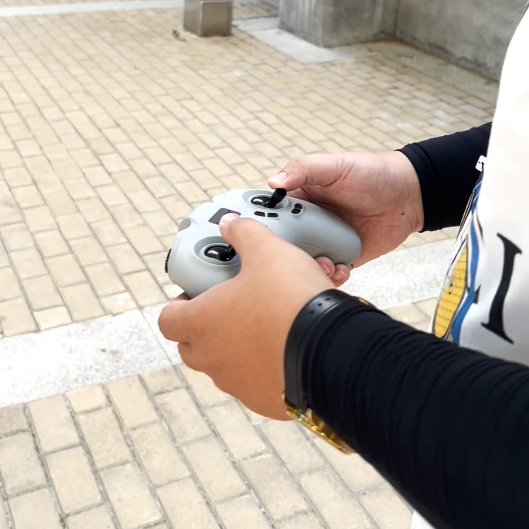
Soccer Drone Practical Guide: When to Use Altitude Hold? 90% of Beginners Get It Wrong
After mastering the basic operation of startup and shutdown, the second core question that beginners will encounter is: Should we use altitude hold mode (Altitude Hold) during training and competitions? This choice directly affects flight difficulty, control feel, tactical performance, and even determines whether you are “flying for fun” or “competing professionally”. In this guide, we will thoroughly explain the applicable scenarios of altitude hold mode, allowing you to train more scientifically and compete more authentically.
1. When to Use Altitude Hold Mode (Altitude Hold)?
No complicated analysis is needed—the simple and straightforward conclusion is just one sentence, which beginners can directly apply:
Beginner Training — Recommended to turn on.
Formal Competitions — Recommended to turn off.
This is not an arbitrary choice, but is jointly determined by the movement logic, control difficulty and tactical system of soccer drones, adapting to the different needs of players from beginners to professionals.
2. Beginner Training: Must Turn on Altitude Hold Mode
For beginners, student teams, and entry-level players, altitude hold mode is the friendliest, safest, and most effective training tool, helping you get started quickly and build confidence.
- Makes flying much easier: Altitude hold stabilizes height automatically, so beginners don’t have to control throttle and direction at the same time. This helps new pilots learn basic movement much faster.
- Safer and more stable: In training arenas with nets, obstacles, or groups of students, stable altitude reduces crashes, collisions, and sudden drops. It protects both the drone and people around.
- More fun for new learners: When flying is smooth and controllable, students stay motivated, build confidence, and enjoy the learning process. It turns a difficult skill into an engaging activity, making training more efficient.
It can be said that altitude hold mode is an indispensable auxiliary function for the beginner stage, allowing you to quickly transition from “being able to fly” to “being able to play”, laying a solid foundation for subsequent advancement.
3. Formal Competitions: Must Turn Off Altitude Hold Mode
Once entering real confrontations, championships, and professional events, altitude hold mode is no longer suitable for use, and may even directly limit your performance and affect the implementation of tactics.
- Height control is part of the game: In soccer drone, height is strategy. Attack, defense, dodging, passing, and scoring all depend on quick, precise up-and-down movements. Professional pilots use height changes to complete feints, interspersions, and raids—this is the core charm of the game and a key manifestation of competitive strength.
- Altitude hold limits your movement: With altitude hold enabled, the drone responds slower to vertical controls. You cannot perform quick ascents, sudden drops, low passes, or high-speed evasive moves—all essential in real competition. You will be completely passive in confrontations and difficult to respond to complex game situations.
- All pro pilots fly without altitude hold: In official events, professional players all control height manually with the throttle, relying on feel and reaction to complete dynamic offense and defense. Real competitions rely on height control, spatial judgment, and on-the-spot tactics, and altitude hold mode will weaken these core abilities, affecting competitive fairness and game appreciation.
4. Summary: Train Smart, Compete Real
Combining the core content of the first two lessons, we can remember the basic operation guidelines of soccer drones: there are norms for startup and shutdown, and altitude hold mode is used according to scenarios. The core is “Train smart, Compete real”.
During training, use startup and shutdown norms to ensure safety, and use altitude hold mode to lay a solid foundation and enhance interest; during competitions, get rid of auxiliary functions and win confrontations with real control and tactics. In the future, we will continue to explain complete content such as flight control, tactical movement, venue rules, and game skills. Learn systematically with the series of courses, and you can also quickly grow from a beginner to a professional soccer drone pilot.
Upcoming Course Preview
Subsequent courses will continue to break down the core knowledge points of soccer drones, from basic control to advanced tactics, covering:
- Lesson 3: Basic Flight Control of Soccer Drones (Forward, Backward, Left, Right, Steering Skills)
- Lesson 4: Introduction to Offensive and Defensive Tactics of Soccer Drones (Offensive Movement, Defensive Skills)
- Lesson 5: On-Court Emergency Handling (Methods to Deal with Loss of Control, Collision, and Crash)