In the United Kingdom, the forward-thinking STEM organization DEMDRONES has successfully launched a student-focused drone programming challenge using a full suite of autonomous flight equipment provided by Oriental Navigation. This hands-on educational program features Flying Loops Kit A , providing the core environment for students to explore, code, and compete in real-world UAV challenges.
A Competition-Ready UAV Obstacle Solution
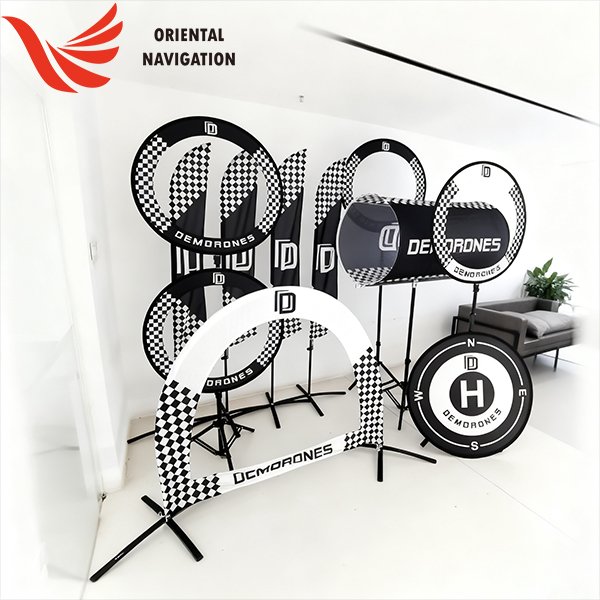
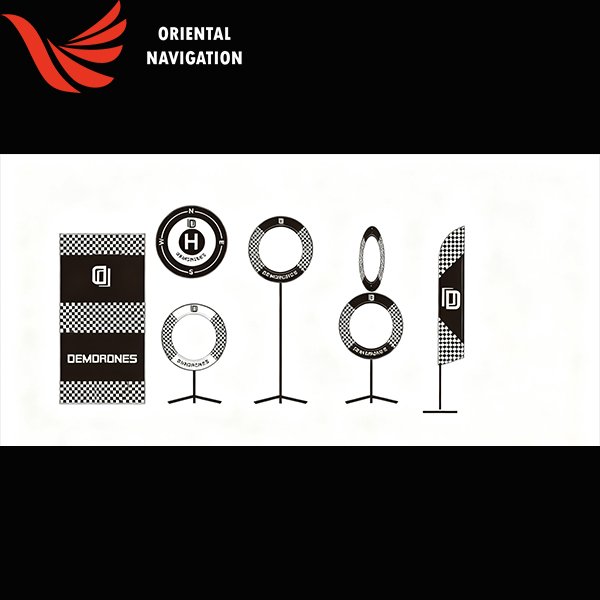
To meet the technical requirements of autonomous UAV programming, DEMDRONES selected Flying Loops Kit A, which includes 10 modular components across 6 unique obstacle types:
- Landing Pad ×1 — 80 cm diameter for designated landing challenges
- Single Loop ×2 — 60 cm inner diameter, adjustable height for flexible positioning
- Tunnel ×1 — 60 cm diameter, elevated at 100 cm central axis height
- Flag ×4 — Each 2 meters high, with a flagpole and attached flag
- Arch ×1 — A 100 cm wide semicircular arch
- Stacked Loops ×1 — Two vertically aligned 60 cm rings (heights: 70 cm and 155 cm), requiring drones to pass through both in sequence
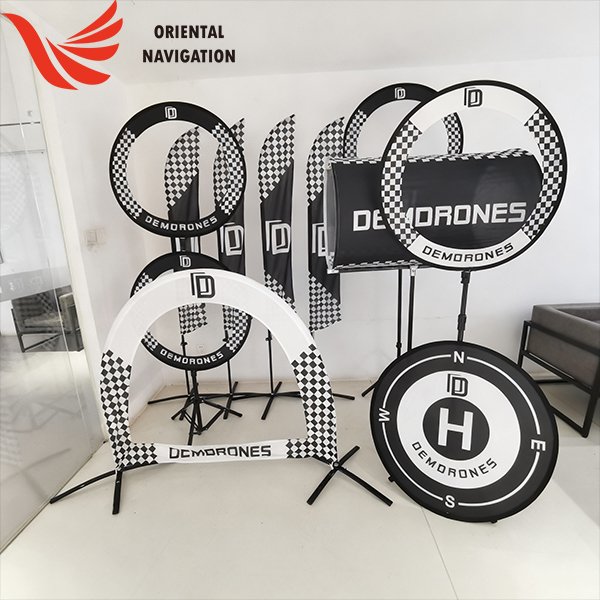
All elements conform to the obstacle types used in UAV Programming Breakthrough competitions. This ensures seamless practice and evaluation across tasks such as crossing loops, flying through tunnels, navigating flags, passing through arches, and executing accurate landings.
Inflatable Arena for Indoor Competition Setup
To complete their autonomous drone course setup, DEMDRONES also purchased one key add-on:
- Inflatable Drone Arena (6m × 3m × 3m): Durable, modular, and highly portable. The arena can be split into two 3×3m fields, ideal for school programs or regional events.
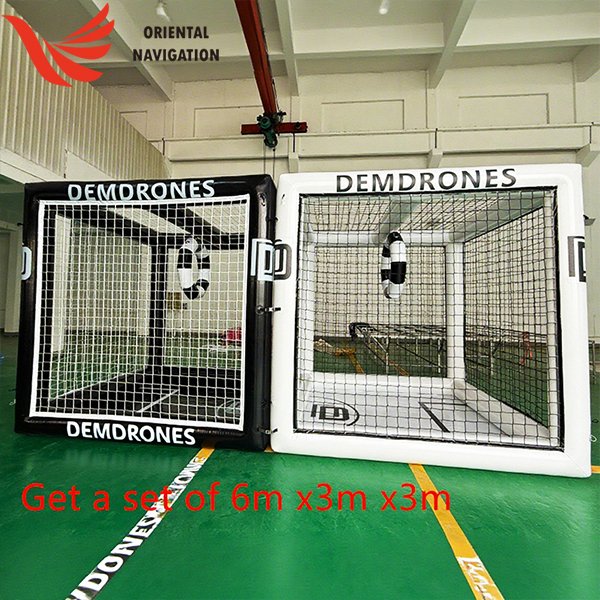
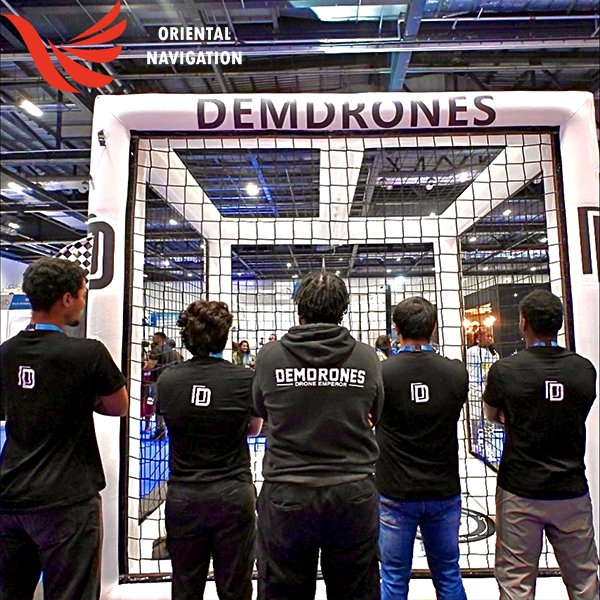
These infrastructure tools allowed DEMDRONES to host on-site programming competitions, creating a professional environment where students could experience real-world technical challenges.
Based on the UAV Programming Breakthrough Format
The programming challenge followed the format of UAV Programming Breakthrough, where students code drones to complete a flight path autonomously within a 6m × 4m × 2.7m arena. Obstacle tasks include:
| Obstacle | Score |
|---|---|
| Low Loop | 10 |
| High Loop | 10 |
| Tunnel | 20 |
| Flag | 10 |
| Crossed Loop | 25 |
| Multi-Flag Detour | 25 |
| Arch | 10 |
| Precision Landing | 5–10 |
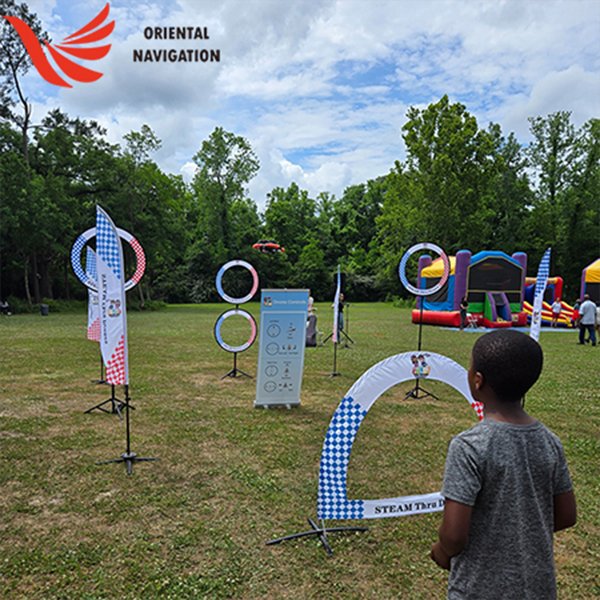
Drones must use visual programming (Scratch or Python) and a downward-facing vision system to recognize markers and navigate without manual control. Each team gets two timed attempts, and the higher score counts.
Impact on STEM Education
By integrating Flying Loops Kit A, obstacle scoring standards, and autonomous programming, DEMDRONES provided a fully immersive STEM experience. Students learned to translate physics and geometry into code, debug real-time systems, and adapt to flight variances—skills critical to modern robotics and AI disciplines.
This UK case study highlights how Oriental Navigation’s drone STEM hardware empowers institutions to offer standardized, competition-ready platforms for education. From loop recognition to precise landings, the full package supports both training and event-level execution.