Core Training for Offense, Defense & Quick Re-Positioning
After mastering straight-line goal entry and basic defense, the next essential foundational skill in drone soccer is return run training. Return runs are not just simple back-and-forth flying. They intensely train the drone to perform a smooth sequence on a single straight line: forward → stable stop → backward → return to start → forward again.
This lesson fully explains the return run training method, from training goals and field setup to control key points and common error corrections, helping students quickly master competition-level return run – speed control.
1. Understand the Core Goal of Return Run Training
The coach explains to students the purpose of return run training:
To make the drone complete a standard cycle on one straight line:
Forward → Stable stop → Backward → Return to start → Forward again
Maintain tail-in orientation throughout, and move accurately between two points at top speed. This training simultaneously builds four key abilities:
- Straight-line flight stability
- Precise braking control
- Forward-backward rhythm control
- Stability during continuous movements
The return run is a critical foundation for all competitive movements, offense-defense transitions, and quick re-positioning later on.
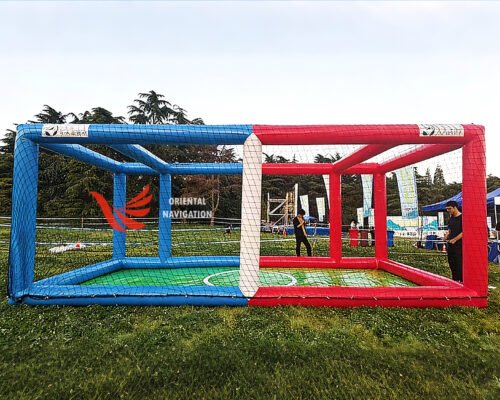
2. Set Up a Closed Return Run Training Area
Return run training must be done in a closed, safe area to avoid collisions.
The coach sets up the field as follows:
- Takeoff point: where the student stands
- Start marker: 1 meter from the takeoff area
- Return point marker: 2 meters straight ahead of the start point
- Safety buffer zone behind the return point
Standard flight path:
Takeoff and hover → Fly to start point → Fly straight to one-drone distance before return point → Fly straight back to start point
3. Take Off in Tail-In Mode & Hover Steadily at the Start Point
Requirements for takeoff and preparation:
- Drone tail always faces the pilot (full-time tail-in)
- Flight height: between knee and waist level
- Hover stable first, then move — no rushing or sudden moves
A stable starting posture ensures high-speed round-trip flight without drifting.
4. Fly Full Speed Forward to the Return Point & Brake Precisely
Key points for the forward movement:
- Push the right stick firmly for straight full-speed forward flight
- Keep height steady with the left stick
- Brake early with strong reverse stick movement to stop cleanly
- Hold a stable hover for 1 second at the return point
- Do not overshoot; reposition if not properly stopped
5. Maintain Tail-In Orientation, Fly Straight Back Along the Same Path
The most important part of the return run is flying backward to position:
- Keep the drone facing the same direction; maintain tail-in view
- Pull the right stick firmly backward to fly straight back
- Keep the same height as the forward flight
- Stop steadily once reaching the start point
This ability directly translates to real matches:
After being knocked away, the defender can return to the goal line as quickly as possible via a straight line.
6. Build a Continuous Return Rhythm with Timed Drills
The coach runs repetitive return run drills:
- One full set: fly forward to return point + stop + fly back to start + stop
- Use 30-second or 1-minute timed challenges
- Count how many clean, stable sets students complete
- Do not sacrifice straightness or height stability for speed
- Unstable, overshot, or drifted attempts do not count
7. Coach Corrects Common Mistakes to Keep Paths Straight
Frequent issues and correction commands:
- Straight forward but crooked backward → “Clean stick control. Don’t let throttle affect yaw. Forward/back only, no left/right.”
- Height unstable when reversing → “Stabilize your left hand. Keep height steady.”
- Can’t stop or overshoots → “Use firm, early reverse stick to brake strongly.”
Students must understand:
Return run training builds strong control over the drone at high speed, preparing them for intense in-game situations.
8. Why Return Runs Matter for Real Offense & Defense
The coach explains match logic:
In real drone soccer, it’s common for defenders to be pushed or knocked away by attackers.
The most important skill then is:
Can you return to your defensive position in the shortest time and straightest line?
It’s also critical for offense:
After scoring, quickly returning to the center line and rushing the opponent’s goal directly improves scoring efficiency.
One simple summary:
Return run training teaches you to rush forward fast to attack, and return immediately to defend when knocked away.
9. Lesson Summary: Return Runs Are the Foundation of Straight Offense & Defense Re-Positioning
Return run training helps students master two core abilities:
- Precise control of stopping points during high-speed flight
- Using early reverse stick movements to stabilize the drone under strong control
These skills will be fully applied in the next lesson’s offense-defense combination training, marking the key step from basic control to real competitive drone soccer.